| Gemma Bonham-Carter |
AI + online marketing / weekly drop |
|
Heyyy pal!
As always, a busy week in the AI and marketing space. I’ve rounded up the things worth knowing for you below (I’m most excited about the YouTube announcement).
And in case you missed it, we officially launched Black Friday in a Box yesterday! Doors are open on the 2026 edition and it is, hands down, our best yet. We’ve built a full suite of Skills that come with the program, so you can conceptualize, plan, and execute your entire campaign in a literal FRACTION of the time. All of my best practices and lessons learned from running 6-figure weeks during Black Friday are built in. There’s a reason this program has sold to 1,351 entrepreneurs and counting… it’s proven and it’s fun.
It’s on pre-sale right now just to my list, so get in while it’s $100 off!
|
| |
| In this email |
| [ 01 ] |
AI search now cites YouTube more than any other platform, and long-form videos get almost all the credit |
| [ 02 ] |
YouTube previewed an editor you boss around in plain English, so start stockpiling footage now |
| [ 03 ] |
Claude’s monthly email report showed me our best send days weren’t the ones I thought |
| [ 04 ] |
Claude Opus 5.5 is out, and the writing dip from this summer looks fixed |
|
| 🧠 The big one |
01 |
AI Search Now Cites YouTube More Than Any Other Platform (and Long-Form Videos Get Almost All the Credit!)
|
|
|
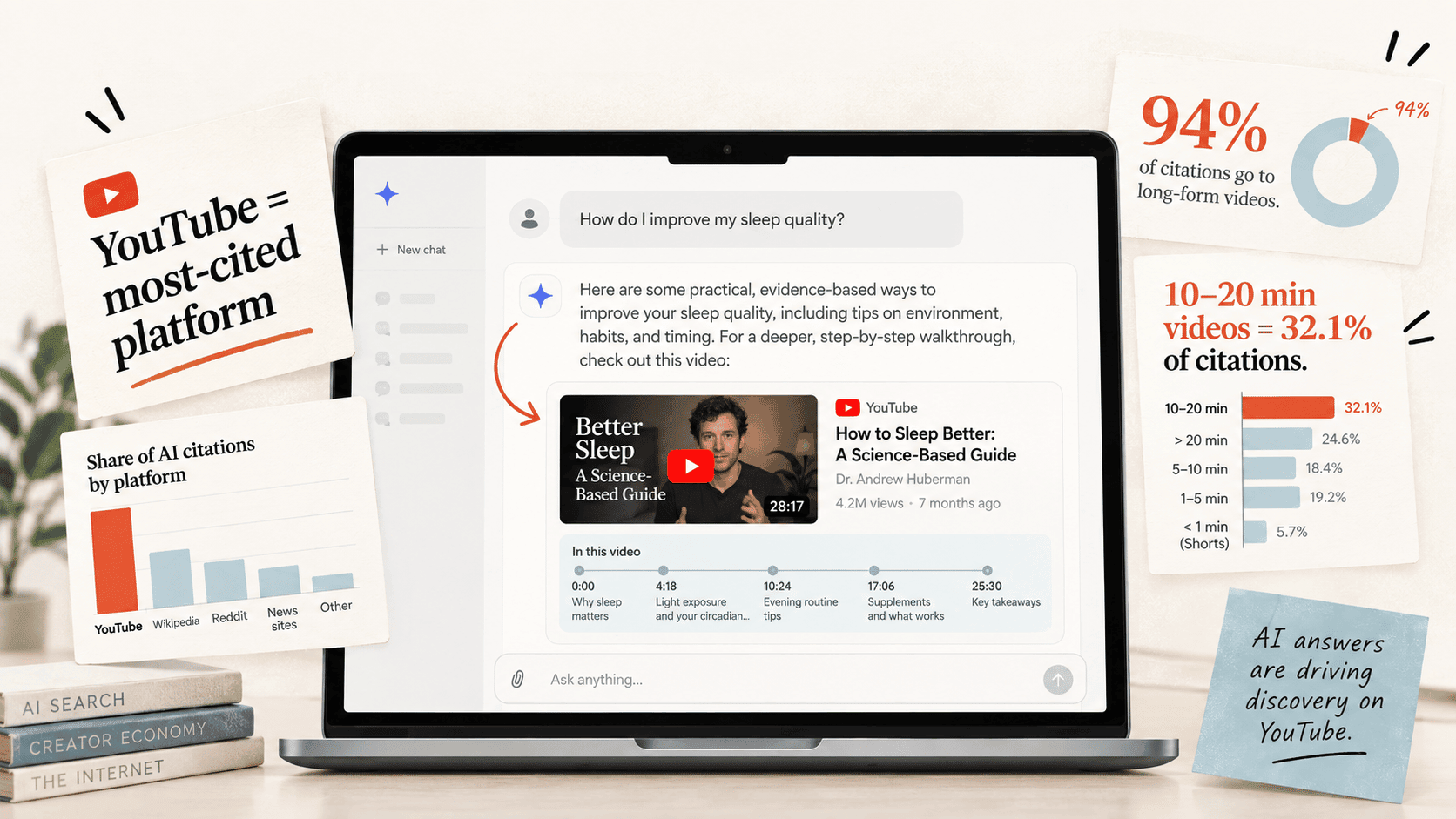
This is interesting… when someone asks Claude, ChatGPT, or Google a question in your niche, there’s a growing chance the answer sends them to a YouTube video, and a new Digiday roundup shows just how big that shift has gotten this year.
Meltwater tracked citations across 8 AI platforms (Claude, ChatGPT, Copilot, Google AI Mode, AI Overviews, Gemini, Perplexity and Grok), and YouTube was the most-cited platform on them in August, pulling ahead of Reddit, which used to hold the top spot. Inside Google’s own AI products, the jump is even steeper. Tinuiti found YouTube’s share of citations in AI Mode more than quadrupled between January and April 2026, and more than doubled in AI Overviews.
A YouTube citation is basically a referral from the AI. Claude and Gemini often embed YouTube videos as recommended content, which means the AI isn’t always pulling its answer from the video, it’s pointing people to the video as the place to learn more. For a business owner, that’s the dream scenario. Someone asked a question about your exact topic, and the AI handed them to you.
Posting your Reels as YouTube Shorts won’t get you cited. If that’s been your YouTube strategy, this is the stat to pay attention to: 94% of YouTube citations go to long-form videos, compared to 5.7% for Shorts, and videos between 10 and 20 minutes long account for 32.1% of citations. The likely reason is structure, since longer videos tend to include chapter markers and timestamps that tell AI where each topic lives, and descriptive, keyword-aligned titles and descriptions add even more context. It’s the same way you’d use a table of contents to jump to the chapter you need instead of reading the whole book.
So should you start a YouTube channel if you don’t have one? For most course creators, coaches, and service providers, I’d say yes, just not the kind you’re picturing. You don’t need to vlog, post daily, or master the shocked-face thumbnail. You need a library of 10 to 20 minute videos that answer the questions your buyers already ask, with chapters, clear titles, and descriptions that say exactly what’s inside. You probably have a head start, too, because old webinars, workshop replays, and podcast episodes can become that library with a little restructuring.
The catch is that this rewards consistency over a single great video. Scrunch analyzed thousands of sponsored YouTube videos and found their citations faded by around 43% within a month, as AI systems refreshed and newer videos displaced older ones.
|
|
|
| |
| 📌 Hot news |
02 |
YouTube Previewed an Editor You Talk To Instead of Click Through
|
|
|
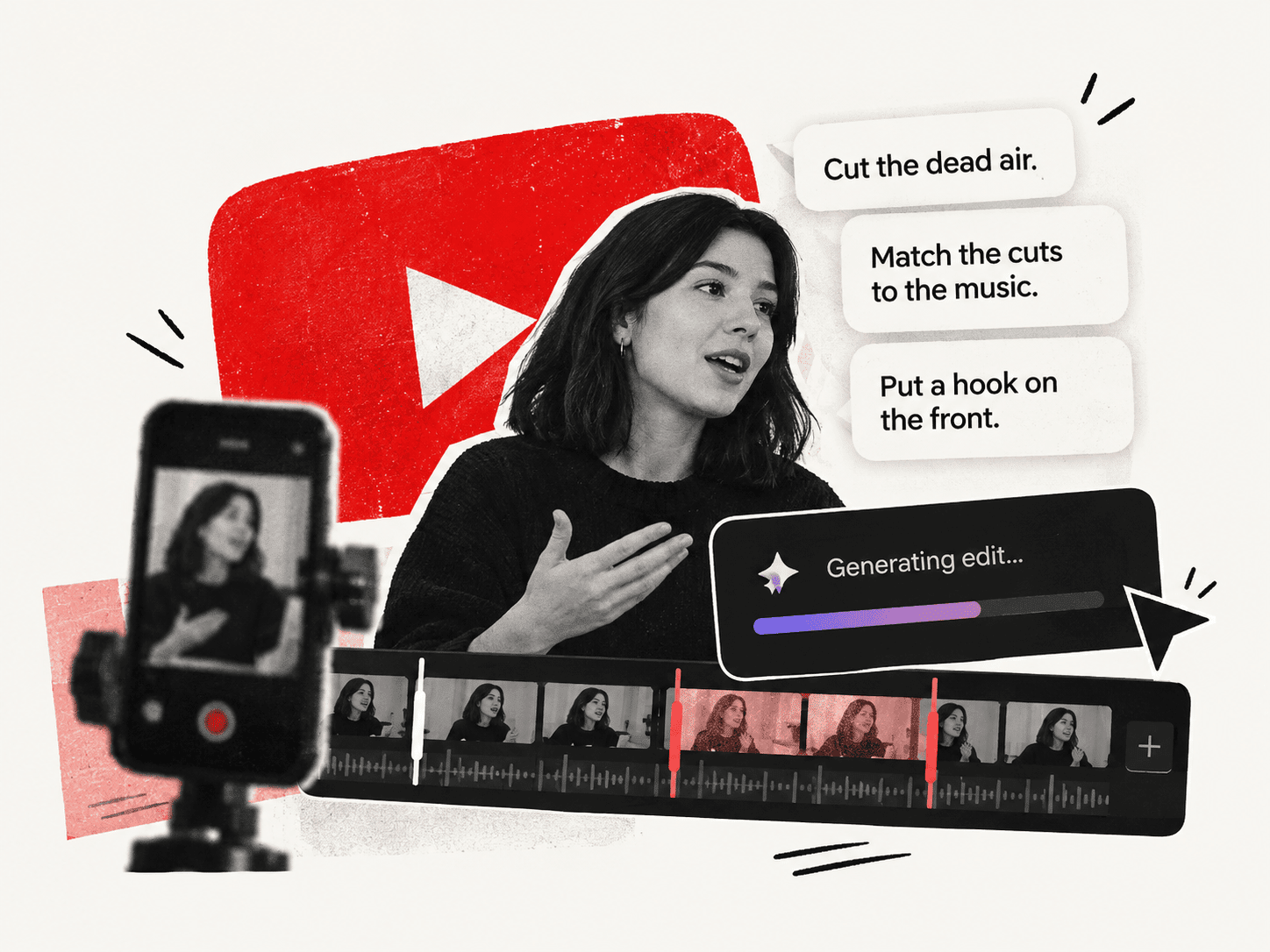
At “Made on YouTube” on September 23, YouTube previewed a new conversational editing tool they are releasing. Instead of dragging clips around a timeline, you just tell it what you want. Trim the awkward pauses, tighten up the pacing, sync the cuts to the beat, and it hands you a first draft you can keep chatting with until it’s right. If it gets something wrong, you can jump back to the regular timeline and fix it yourself, so you’re never stuck arguing with a robot about where the B-roll goes. It’s headed to Shorts and the YouTube Create app.
One of the creators YouTube featured described the problem perfectly: a 1-hour shoot can turn into 10 hours or more in the edit. This new functionality will solve that (dreamy!).
YouTube also announced thumbnails generated to match your channel’s style, A/B testing for up to 3 different cuts of the same video (finally, a way to settle which hook wins), an AI helper in YouTube Studio that writes your pitch when a brand reaches out about a sponsorship, and Shorts organized into seasons and episodes, because apparently microdramas are a whole thing now.
Before you go digging through your app for any of this, most of it came with a very confident “soon” and zero actual dates, so treat this as a preview of where YouTube is headed rather than something you can open this afternoon.
But think about what happens when it does land. If editing stops being the time-consuming and expensive part of video, then maybe you put YouTube back on your marketing plan? 👀
If that’s a yes for you, then while YouTube works out its release dates, build yourself a stockpile. Film your next workshop, record yourself walking through the thing you explain on every single discovery call, and hit record the next time you screen-share a process you could do in your sleep. Don’t edit a second of it, because future you (and your new robot editor) will handle that part.
When this ships, the people sitting on 30 raw clips are going to have a very different month than the people starting from zero. Be the 30 clips person. 🤌
|
|
|
| |
| 🖥️ Try this |
03 |
Claude’s Monthly Email Report Showed Me Our Best Send Days Weren’t the Ones I Thought
|
|
|
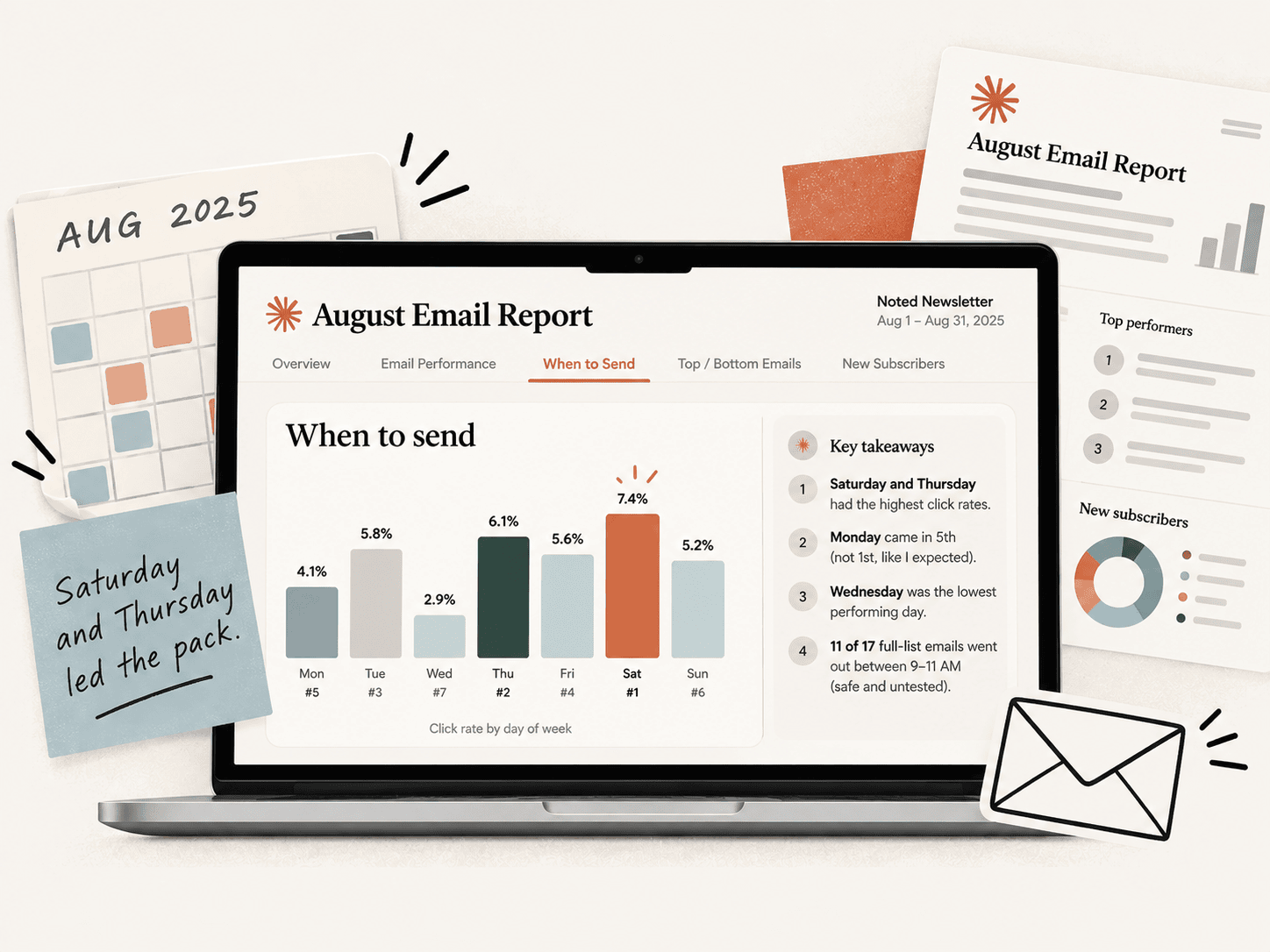
I was shook the first time I opened the email report Claude built for us. It pulled every email we sent in August, sorted them by type, graded our open, click, and unsubscribe rates against our targets and the month before, showed us where new subscribers came from, and then did the thing I would never have done by hand: it ranked our send days and times by how people actually responded.
The days I would have sworn by weren’t the winners. I would have told you our best day was Monday, hands down, and in August it came in 5th out of 7 for clicks. Saturday and Thursday led the pack, and Wednesday came dead last. It also showed that 11 of our 17 full-list emails went out in the same 9 to 11 AM window, which the report called safe and untested rather than optimized. Ouch, and fair.
What really got me is that it didn’t just hand me a table and walk away. It pointed out that both Saturday sends were the final emails of a launch, so part of that win was the content and not the calendar, and then it told us exactly how to get a clean answer: keep Noted at the same hour for 4 weeks, then move it and compare. That’s what data over drama looks like. It’s so easy to run your email on gut feel and a couple of memorable wins, and this report is the reason we’re now looking at shifting the days we send.
It runs as a scheduled task on the 1st of every month, so the report lands in our team Slack and shared Drive without anyone opening Kit.
To build your own, connect your email platform to Claude, paste in something like this, and ask Claude to schedule it for the 1st of every month:
|
| Copy this prompt |
| You’re my email performance analyst. On the 1st of each month, pull every email I sent last month from [your email platform], plus the month before for comparison. Sort them by type (newsletters, sales emails, events, and anything else I send regularly) and compare my open, click, and unsubscribe rates to [my targets] and to last month. Rank my send days and send times from best to worst by click rate, show my top 5 and bottom 5 emails by subject line, and tell me where my new subscribers came from. After every section, explain what the numbers mean, what I should change next month, and anything that might be skewing the results. My send times are in [your time zone], so don’t convert them. Build it as a designed report, and double-check every number before you deliver it. |
|
|
(Just as a reminder, scheduled tasks like this are what I share inside my program, AI All Stars. You get the full set-up, the instructions file, and configuration how-to.)
|
|
|
| |
| 🧰 Worth knowing |
04 |
Claude Opus 5.5 Is Out and the Writing Dip From This Summer Looks Fixed
|
|
|
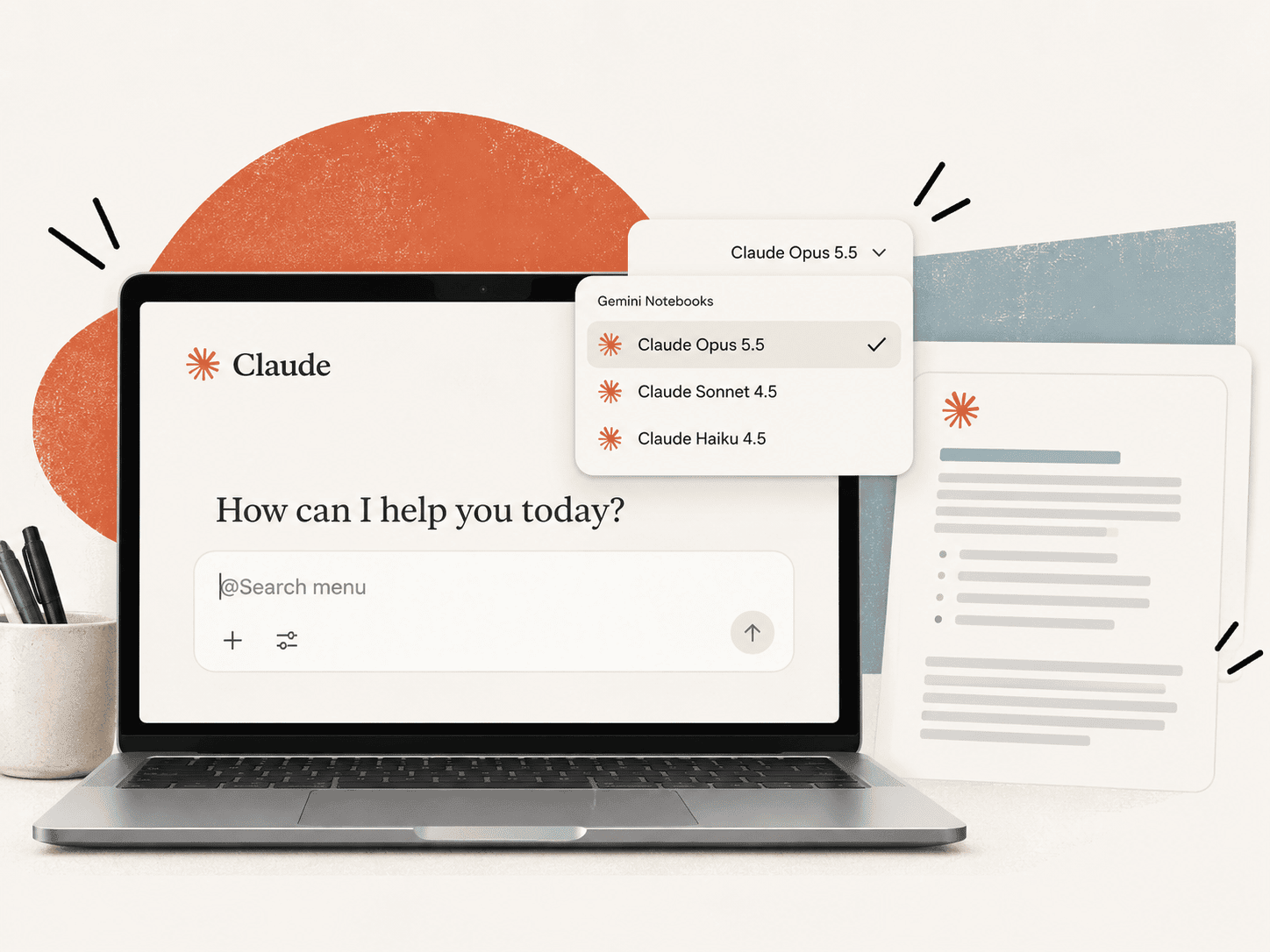
Anthropic released Claude Opus 5.5 on September 22, and after a week of running our real work through it, my team and I agree it’s a big step up from Opus 5, the model that came out in July.
Claude’s output had a little blip this summer, and we spent more time editing drafts than we had in a while. I was also hearing from our students inside AI All Stars who were suddenly struggling with what they were getting out of Claude.
With Opus 5.5, the writing is really good again (there’s data behind it). Arena analyzed responses from August and September and found 10 of 12 writing measures moved in a better direction. The tradeoff is that answers run a little longer, averaging 481 words compared to 453.
So how does it stack up against ChatGPT? OpenAI’s newest model, GPT-6 Astra, came out on September 3, so the timing makes for a real head-to-head. Tom’s Guide gave ChatGPT-6 and Opus 5.5 the same 5 everyday prompts, and Claude won 4 of them, including a writing test that asked both to make a boring announcement sound human. On the technical benchmarks, it’s a split decision: Opus 5.5 is the stronger pick for coding and high-volume knowledge work, while Astra holds the edge on frontier math, science, and abstract reasoning. For the marketing, writing, and business work most of us actually do, Claude is back on top.
|
|
|
| |
|
That’s a wrap for this week!

|
See you next Thursday
Gemma.
|
|
| P.S. |
| Love this newsletter? There’s a whole lot more AI training where this came from. AI All Stars is where I teach my full system, and you get my complete set of custom-built skills (there are over 40 of them). Start with the free AI workshop and get a behind the scenes look. |
|
|
|
|